

Squeeze a little lemon into a glass of deep blue tea and wait two seconds. The blue slides into violet as if someone flipped a switch, and most people end up making a second glass just to watch it again.
That’s the fun of any butterfly pea flower tea recipe, and the base recipe is easy. You steep dried flowers in just-boiled water for about five minutes, strain, and drink it hot or over ice. It has no caffeine, so it works as a caffeine free tea at any time of day. Below you’ll find the basic cup, an iced version, a colour-changing lemonade, a blue latte, a quick spritzer, and two blue tea recipe ideas with an Indian twist.
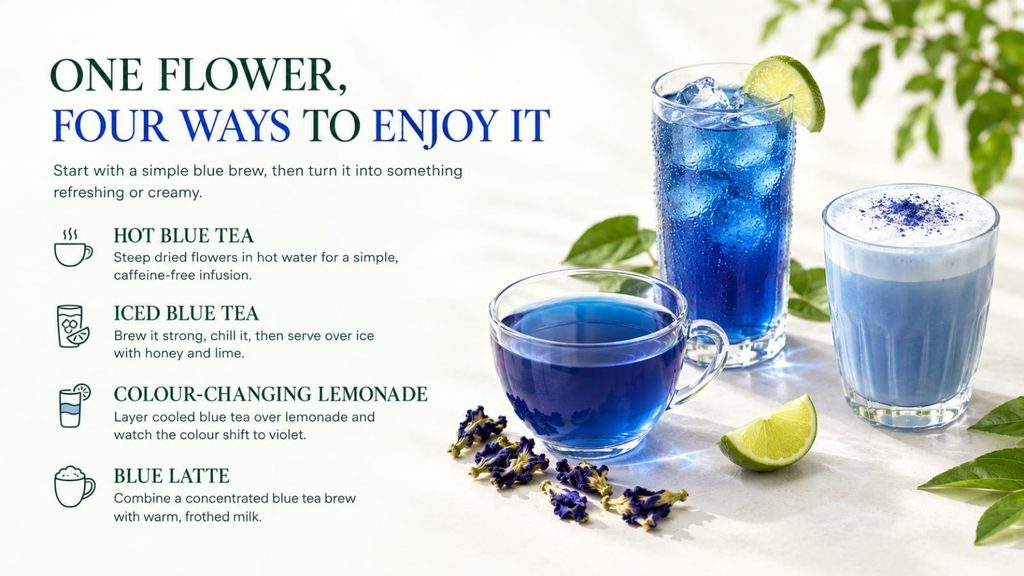
Butterfly Pea Tea Recipes at a Glance
| Recipe | Time | Best for |
| Hot blue tea | About 7 minutes | A calm everyday cup |
| Iced blue pea tea | About 10 minutes, plus cooling | Hot afternoons |
| Colour-changing lemonade | About 10 minutes, plus cooling | Guests and kids |
| Blue latte | About 10 minutes | A creamy morning drink |
| Blue tea spritzer | About 5 minutes | A quick fizzy drink |
| Mint and ginger blue tea, blue nimbu pani | About 10 minutes | Everyday sipping with an Indian twist |
Before You Start: Dried Butterfly Pea Flower, Blue Tea Bags or Powder?
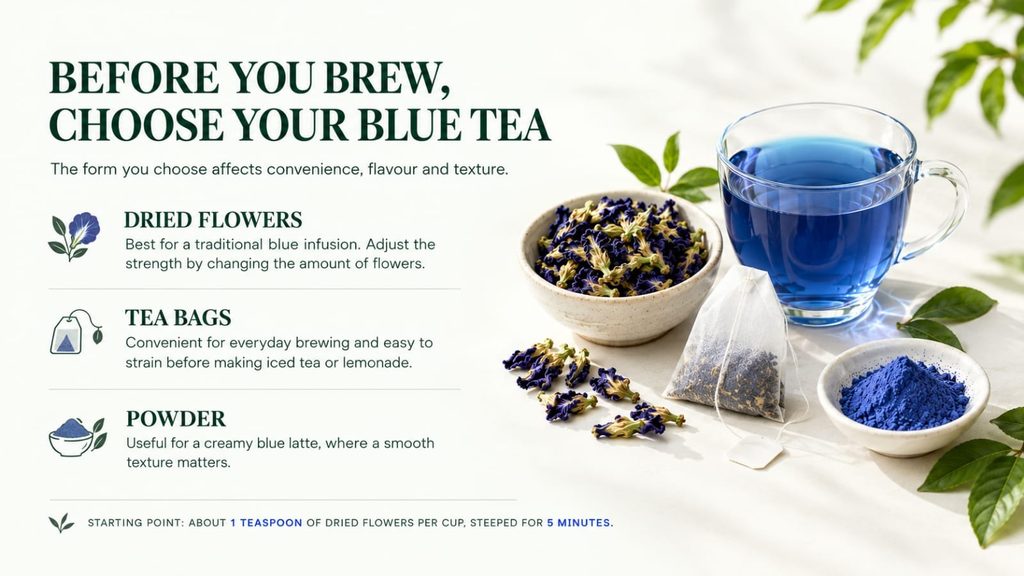
Most of these drinks work with whatever form you have, but each behaves a little differently. Dried butterfly pea flower is our favourite, because you can see exactly what’s in the cup and make the brew as strong or as light as you like. Blue tea bags are easier and cleaner, especially for lemonade, where the flavour gets covered up anyway. Powder gives a smoother, creamier result, which is why blue latte recipes usually call for it, though a strong brew from dried flowers works fine too.
A good starting point is about a teaspoon of dried flowers per cup of just-boiled water, steeped for around five minutes. Most recipes land in that range, so adjust it to your taste and to the instructions on your pack.
One more thing worth knowing. Blue tea tastes mild and a little earthy, with hardly any bitterness. Some people find it too plain on its own, which is why honey, lemon, mint and ginger get used so often. Not sure which honey to pick? Read raw honey vs regular honey. If you’re coming from stronger teas, go in expecting the colour first and the flavour second.
Basic Butterfly Pea Flower Tea Recipe (How to Make Blue Tea)
If you’ve been searching how to make blue tea, this is the one. It takes about seven minutes from kettle to cup, and it’s also the base for every recipe below, so once you’ve got it you’ve got them all. It’s how to prepare blue tea the simple way.
You’ll need:
- About a teaspoon of dried butterfly pea flowers
- 1 cup of just-boiled water
- Honey and lemon, if you like
How to make butterfly pea flower tea:
- Put the dried flowers in your cup or a small pot.
- Pour in the just-boiled water.
- Steep for about five minutes, until the water turns a deep blue. That’s how to brew blue tea so the colour is rich without any fuss.
- Strain out the flowers.
- Sip it plain, stir in a spoon of honey, or squeeze in a little lemon and watch it turn violet.
If the cup tastes weak, add a few more flowers next time instead of steeping much longer.
Iced Blue Pea Tea Recipe (Thai-Style, With Honey and Lime)
This blue pea tea recipe is the one for a hot afternoon. In Thailand the iced version is a familiar drink, and Wikipedia’s page on butterfly pea flower tea notes that it’s commonly mixed with honey and lemon.
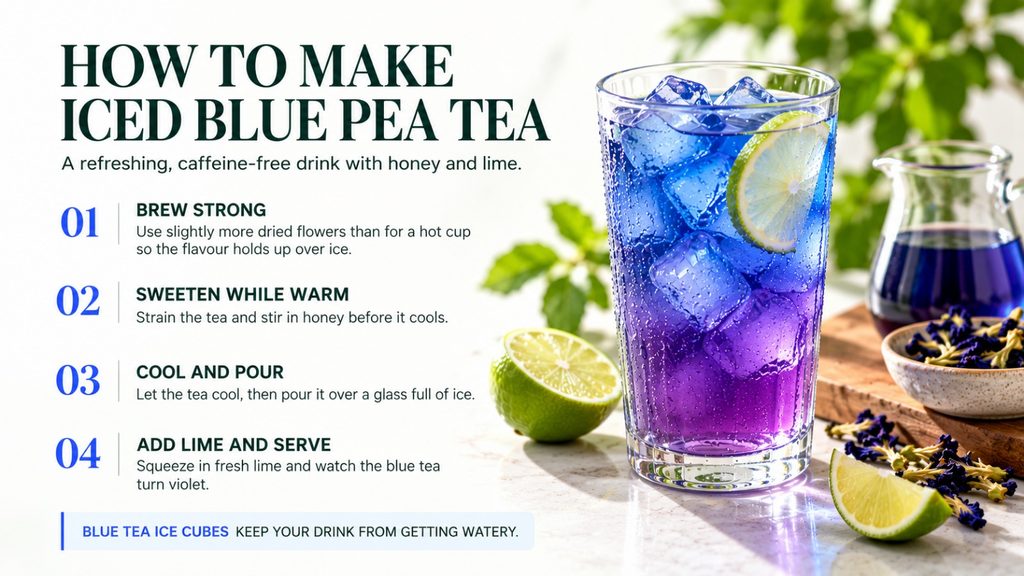
You’ll need dried flowers, just-boiled water, ice, a spoon of honey and a lime or lemon wedge. Brew the tea a bit stronger than usual, using a few more flowers than for a hot cup, because the ice will water it down. Strain it, stir in the honey while the tea is still warm so it dissolves, let it cool for a few minutes, and pour it over a glass full of ice. Squeeze in the lime, watch it turn purple, and drink it right away.
For something prettier, freeze some of the brewed tea in an ice tray and use the blue cubes in place of ordinary ice. They keep the drink cold without watering it down.
If you’d rather not hunt around for good flowers, our Kadambari butterfly pea flower tea comes in 25gm and 50gm pouches, and it goes really well with a spoon of our Kadambari raw forest honey. If you’d like to order blue tea online, ours ships across India.
Butterfly Pea Tea Recipe for Colour-Changing Lemonade
This butterfly pea tea recipe is the crowd pleaser. The trick is to pour cooled tea slowly over lemonade just before serving, so the colours drift from blue to violet right in front of your guests.
You’ll need (makes 2 glasses):
- 1 cup strong butterfly pea tea, cooled
- 2 cups lemonade, homemade or store-bought
- Ice and lemon slices
Steps:
- Brew the tea strong and let it cool completely, because warm tea melts the ice too fast.
- Fill two glasses with ice and pour in the lemonade until each is about two-thirds full.
- Pour the cooled tea slowly over the back of a spoon so it floats on top and forms a blue layer.
- Serve it as it is, then stir at the table and the whole drink turns violet.
Why does it change colour? The blue comes from anthocyanins, natural pigments that react to acidity. Add lemon or lemonade and the cup shifts from blue to purple, and with enough acid it leans toward pink. This review of the flower’s anthocyanins explains how those pigments behave and why the flower is used as a natural food colour. You can brew the tea and make the lemonade ahead of time, but combine them only when you’re ready to serve.
Blue Latte With Butterfly Pea Tea
A blue latte is a creamy, gentle morning drink. Brew a strong cup of butterfly pea tea from dried flowers (powder is the usual route, but a concentrated brew works well too). Warm about half a cup of milk or plant milk and froth it with a whisk. Pour the brew into a mug, spoon the milk on top, and sweeten with honey. Milk won’t turn it purple the way lemon does, so skip the citrus here and enjoy the blue.
Quick Blue Tea Spritzer
Brew strong blue tea and let it cool. Fill a glass with ice, squeeze in a little lemon, pour the tea in until the glass is about half full, and top it up with chilled soda water. Drop in a few of the blue ice cubes and you have a fizzy, caffeine-free drink in five minutes.
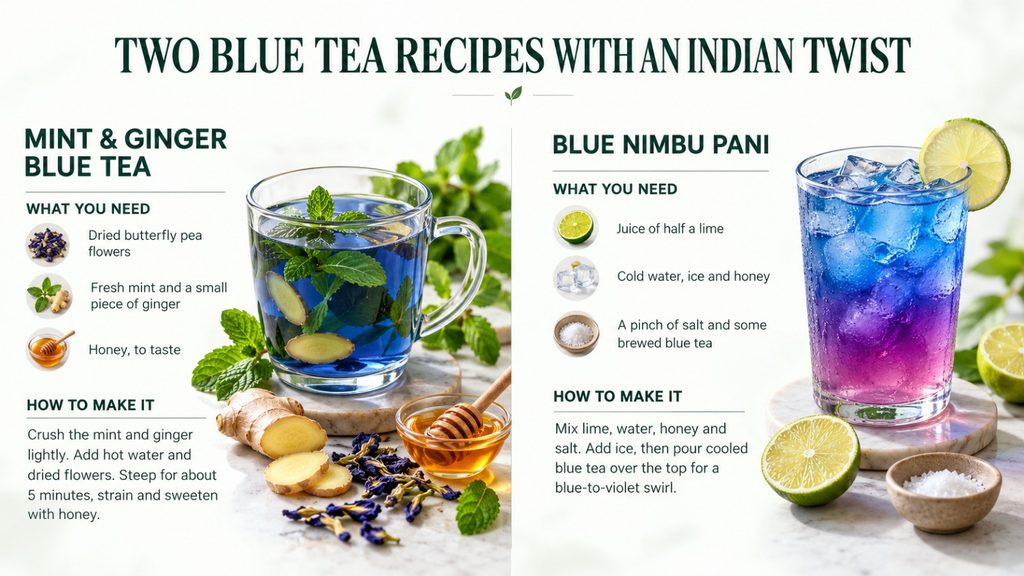
Two Blue Tea Recipe Ideas With an Indian Twist
Our favourite part of making blue tea is mixing it with things already sitting in the kitchen. Here are two we keep coming back to.
Mint and ginger blue tea. Crush a few mint leaves and a small piece of ginger in your cup, add the dried flowers, pour in just-boiled water and steep for about five minutes. Strain and stir in a little honey. The ginger and mint give blue tea the punch it can lack on its own.
Blue nimbu pani. Stir the juice of half a lime, a spoon of honey and a pinch of salt into a glass of cold water. Add ice, then pour a splash of cooled blue tea on top and watch it swirl and turn violet. It’s a good one for warm evenings.
Tips for Better Butterfly Pea Tea
If the colour looks dull, use a few more flowers and make sure the water is just-boiled. If it tastes weak, add more flowers rather than steeping for ages, and lean on honey, lemon, mint or ginger. If you’re making extra, let it cool, keep it covered in the fridge and finish it within a day, then add lemon only when you serve so the colour change still happens. Keep the dried flowers in a cool, dry place and close the pack tightly after opening.
Curious about the research behind the flower? We went through it in our guide to aparajita flower benefits. If you’re pregnant, breastfeeding or on regular medicine, check with your doctor before making it a daily habit.
Which Butterfly Pea Flower Tea Recipe Should You Try First?
Start with the basic hot cup, since it teaches you the colour and the taste. Then move on to the lemonade when you have guests, and the iced version when the afternoon gets long. Every butterfly pea flower tea recipe here is caffeine-free, so you can mix and match through the day.
If you’d like a ready-made morning pair, our Morning Wellness Combo has butterfly pea flower tea and raw forest honey together. Got a question we didn’t cover? Contact us.
How much dried butterfly pea flower should I use per cup?
A good starting point is about a teaspoon of dried flowers per cup of just-boiled water. Use a few more for iced tea, lattes or lemonade, where the brew needs to be stronger, and fewer if you like it light. Match it to the instructions on your pack.
How long should I steep butterfly pea tea?
About five minutes in just-boiled water is enough for a deep blue cup. Longer steeping won’t add much, so if the tea tastes weak, use a few more flowers instead of stretching the time.
Why does butterfly pea tea change colour?
The blue comes from pigments called anthocyanins, which react to acidity. Add lemon, lime or lemonade and the tea turns from blue to purple, and with enough acid toward pink. Milk or plain water won’t change the colour the same way.
Can I make blue tea ahead and keep it in the fridge?
Yes. Brew it, let it cool, and keep it covered in the fridge, ideally finishing it within a day. For lemonade or spritzers, add the lemon at serving time so you still get the colour change.
Dried flowers, blue tea bags or powder: which is best?
Dried flowers give you the most control over strength and show exactly what’s in the cup. Blue tea bags are easiest for quick lemonade. Powder gives a smoother, creamier latte. Any of them works, so pick the one that suits the recipe.
What does butterfly pea tea taste like?
Mild and a little earthy, with hardly any bitterness. Many people find it quite plain on its own, which is why it’s often mixed with honey, lemon, mint or ginger. You’ll enjoy the colour first and the flavour second.
Can I drink butterfly pea tea every day?
Most people drink one or two cups a day, and plain blue tea has no caffeine. Long-term daily use hasn’t been studied much in humans, so keep it moderate, and check with your doctor if you’re pregnant, breastfeeding or take regular medicine.

