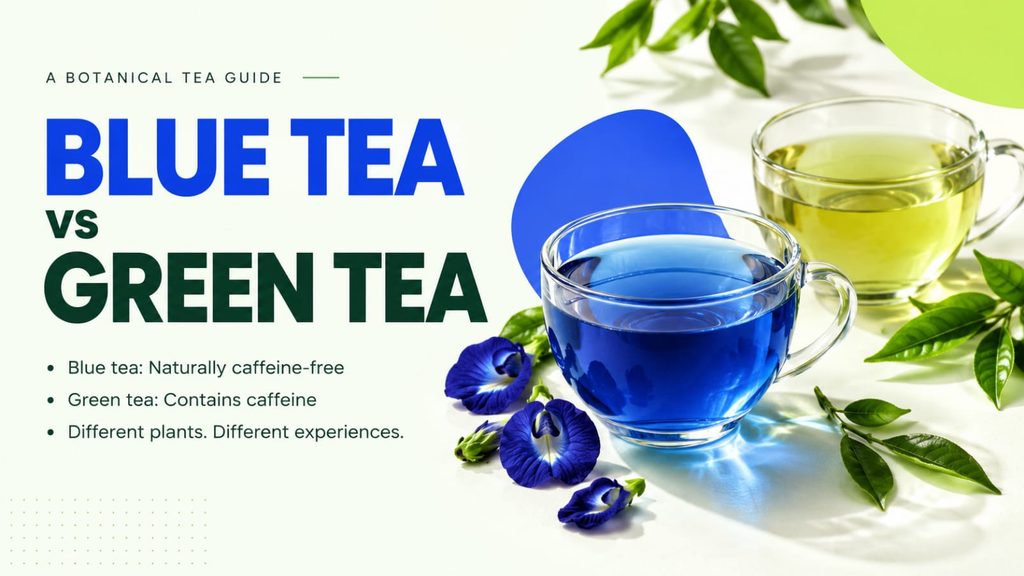
Comparing blue tea vs green tea is a bit like comparing lemonade and espresso. Both are drinks, both are popular, and that’s about where the similarity ends. One comes from a flower and has no caffeine. The other comes from the tea plant and does.
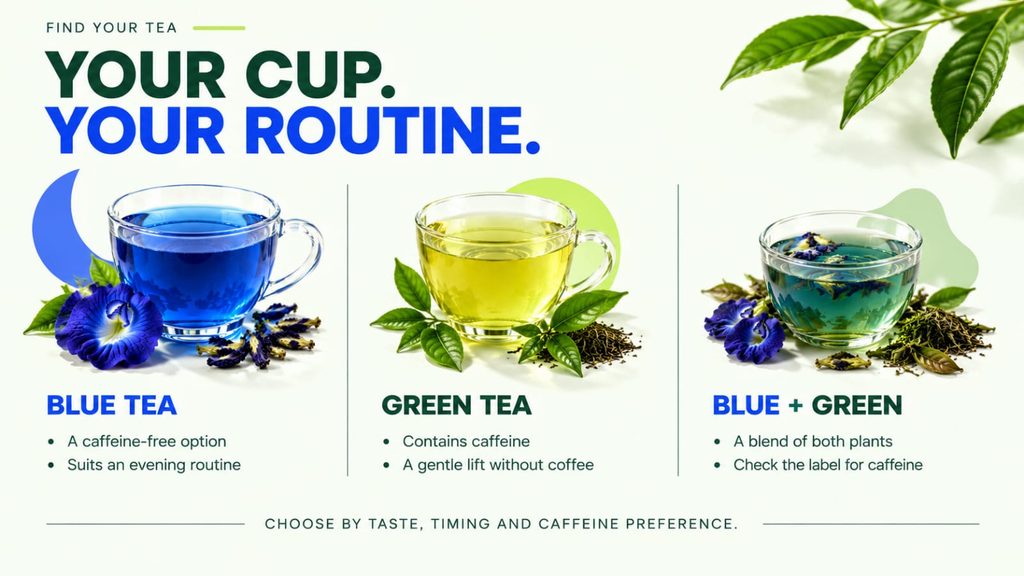
So which should you drink? Neither wins outright. Blue tea suits you if you want a caffeine-free cup, especially in the evening. Green tea suits you if you want a gentle lift and don’t mind the caffeine. Below we’ll cover what each one is, how they differ on caffeine, taste and research, when to drink them, and what “blue green tea” actually means.
What Is Blue Tea?
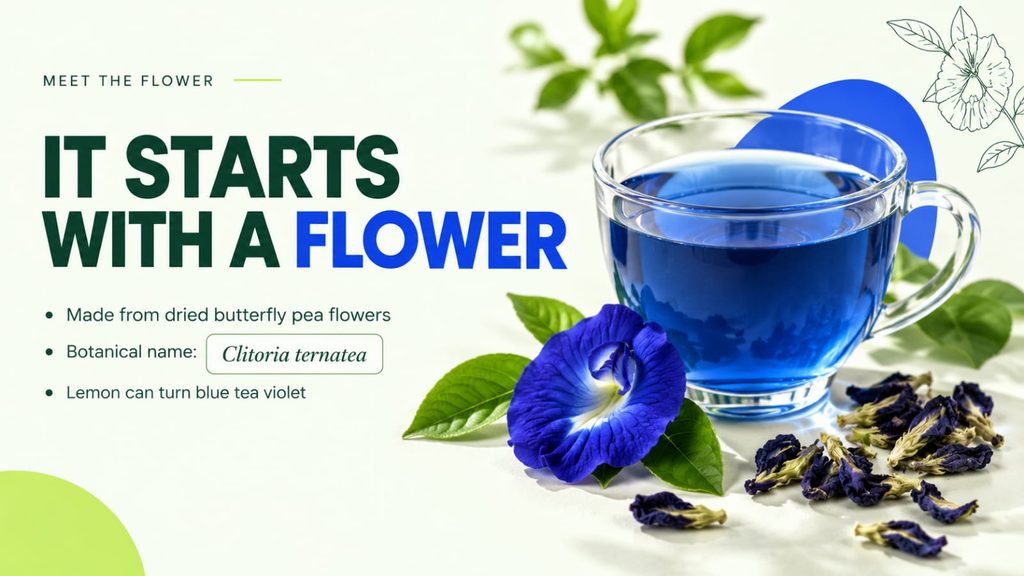
What is blue tea? It’s the everyday name for butterfly pea flower tea, a herbal tea made from the dried flowers of Clitoria ternatea, which many people in India call aparajita. If you’ve seen it sold as blue pea tea or blue flower tea, it’s the same thing.
One small clearing up. People search for blue tea leaves, but there aren’t any tea leaves in them. The blue tea ingredients on a plain pack, like our dried butterfly pea flower tea, are just dried flowers. That’s why it’s an herbal infusion and not a true tea, and why it has no caffeine. The deep blue comes from pigments called anthocyanins, and a squeeze of lemon turns the cup violet, which is the party trick everyone loves. If you want the research behind it, we went through it in our guide to aparajita flower benefits.
Blue Tea vs Green Tea: How They Actually Differ
The biggest difference is caffeine. Blue tea has none and green tea has some. After that it comes down to taste, colour and how much research sits behind each one.
| Blue tea | Green tea | |
| Made from | Dried butterfly pea (aparajita) flowers | Leaves of the Camellia sinensis plant |
| Caffeine | None in plain blue tea | Roughly 30 to 50 mg per cup |
| Taste | Mild, lightly earthy | Grassy, can turn bitter |
| Colour | Deep blue, violet with lemon | Pale yellow-green |
| Main plant compounds | Anthocyanins | Polyphenols |
| Research | Early, mostly lab and animal work | Far more studied, mostly using extracts |
| Best for | Evenings and caffeine-free days | A gentle lift without coffee |
Caffeine
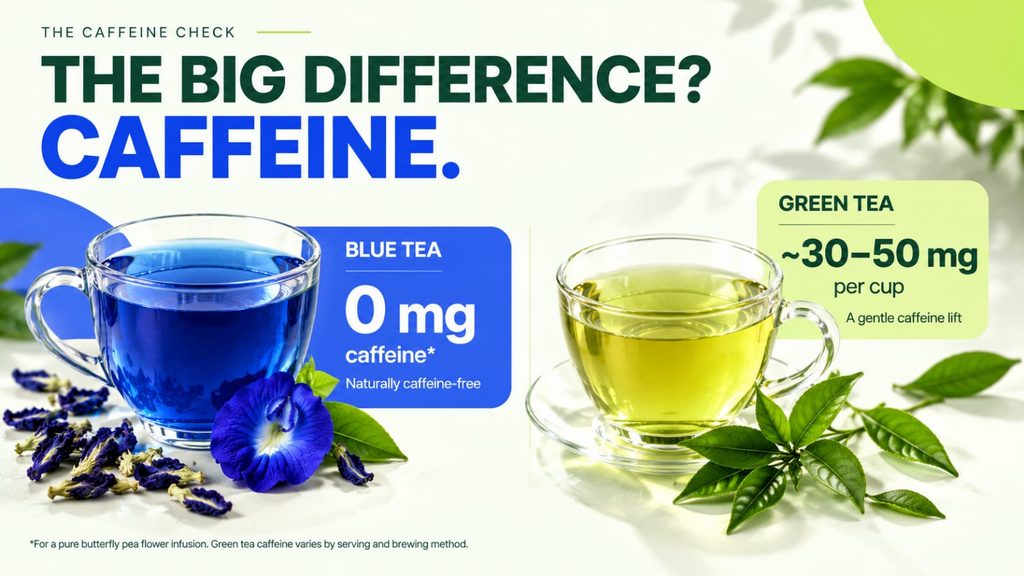
Green tea comes from the same plant as black tea, and the NCCIH fact sheet on green tea says plainly that it contains caffeine. A typical cup has roughly 30 to 50 mg, according to Healthline, which is much less than coffee but enough to matter if you’re sensitive or drinking late.
Plain blue tea has none, because the flower isn’t related to the tea plant. If you’re after caffeine free tea for the evening, this is where it earns its place on the shelf.
Taste and colour
Blue tea tastes mild and a little earthy, with almost no bitterness, which is why it takes honey, lemon or mint so easily. Green tea is more grassy, and it can turn bitter if you steep it too long or use water that’s too hot. On colour, one gives you bright blue, or violet once lemon goes in, and the other a pale yellow-green.
Health and research
Green tea has been studied far more. NCCIH points out, though, that most of those studies used green tea extract supplements and not the drink, so the research doesn’t map neatly onto a cup. Blue tea is earlier in the story. Its anthocyanins show antioxidant activity in the lab, and most other claims you’ll read online come from lab and animal work.
So neither tea is a weight loss shortcut or a detox, whatever the label says. They’re both nice drinks with some interesting science behind them, and that’s a fair place to leave it.
When to Drink Blue Tea
There’s no proven best time to drink blue tea. It has no caffeine, so you can have it in the morning, afternoon or night, whenever it suits you. Plenty of articles say to drink it on an empty stomach, or exactly 30 minutes before meals for weight loss, but we couldn’t find research behind either rule.
So think about how you’ll enjoy it. In the morning it works as a gentle first cup, especially with a spoon of honey. In the afternoon it can replace the sugary drink you’d otherwise reach for. After dinner it’s a calm, caffeine-free way to wind down, and in Thailand it’s often served just like that, with honey and lemon. If it ever sits heavy on your stomach, have it after food instead, since Healthline notes that some people get digestive discomfort from large amounts.
Green tea needs a bit more thought because of the caffeine. Most people keep it for earlier in the day, and the MSD Manual suggests not drinking it on an empty stomach, though it adds that this hasn’t been well studied.
If you’d like to try a morning cup, our Morning Wellness Combo pairs butterfly pea flower tea with raw forest honey, so you can brew one and sweeten it with the other.
Blue Green Tea: What Happens When You Mix Them?
Search for blue green tea and you’ll find a few different things. Some brands sell blends of butterfly pea flowers and green tea leaves, and in those the caffeine comes from the green tea part, so a “blue pea green tea” isn’t caffeine-free. You’ll also see “blue-green tea” used for oolong in China, so read the label if that matters to you.
If you’d like to make your own blend, steep the green tea a little shorter than usual and add the blue flowers, and you’ll get a mild cup with a hint of colour. If you like tart blends, our hibiscus tea pairs well with green tea too.
So Which One Should You Choose?
- Choose blue tea if you want caffeine free tea for the evening, you’re sensitive to caffeine, or you like a mild, earthy cup you can dress up with honey or lemon.
- Choose green tea if you want a gentle lift without coffee and you don’t mind a grassy taste.
- Choose both if your day has a morning and an evening. Green tea early, blue tea later.
And if you’re pregnant, breastfeeding or take regular medicine, check with your doctor first. NCCIH says caffeine intake in pregnancy should stay moderate, and blue tea doesn’t have much human safety research behind it. This is general information, not medical advice.
The Short Answer on Blue Tea vs Green Tea
Pick blue tea when you want a caffeine-free, mellow cup, and green tea when you want a light lift. You don’t have to choose forever, and plenty of people drink both.
If you’d like to try blue tea first, start with our Butterfly Pea Flower Tea. It comes in a 25gm pouch. That’s an easy way to try it. And if you have a question we didn’t cover contact us.
Is blue tea better than green tea?
Not better, just different. Blue tea is caffeine-free and mild, which suits evenings. Green tea has caffeine and has been studied more, which suits people who want a gentle lift. Neither is a miracle drink, so pick the one you’ll enjoy and actually drink.
Does blue tea have caffeine?
No. Plain blue tea is made from dried butterfly pea flowers, not from the tea plant, so it’s naturally caffeine-free. The exception is a blend with green tea or black tea, where the caffeine comes from the tea leaves. Check the ingredients list if you’re unsure.
When is the best time to drink blue tea?
There’s no proven best time. Since it has no caffeine, you can have it in the morning, afternoon or evening. Many people like it after dinner as a calm cup. If it feels heavy on an empty stomach, have it after food instead.
Can I drink blue tea and green tea on the same day?
Yes, most healthy adults can. A common routine is green tea in the morning for a light lift and blue tea in the evening because it has no caffeine. Keep your total caffeine moderate, and ask your doctor if you’re pregnant or take regular medicine.
Which is better for weight loss, blue tea or green tea?
Neither works as a weight loss shortcut. We didn’t find strong evidence that blue tea causes weight loss, and most green tea research used extracts, not the drink. What helps is swapping sugary drinks for either one, since unsweetened tea has almost no calories.
What does blue tea taste like compared with green tea?
Blue tea tastes mild and a little earthy, with hardly any bitterness. Green tea is grassier and can turn bitter if it’s over-steeped. That mildness is why blue tea works well with honey, lemon or mint, while green tea is usually enjoyed plain.