If you’ve ever poured hot water over a few dried hibiscus flowers, you know how fast the colour shows up. Within a minute, the cup turns deep ruby red, and the first sip is a lot more sour than you’d expect. Plenty of people love it, and plenty of them ask us the same thing: is it actually good for you, or is it just pretty?
Short answer: hibiscus flower tea has no caffeine, and its best-studied benefit is a small drop in blood pressure. That sounds great, but it’s also the reason some people should check with a doctor before drinking it every day. Below we’ll go through what the research shows, how to make a proper cup (hot, iced, or mixed with green tea), what to look for when you buy, and who should skip it.
What Is Hibiscus Flower Tea?
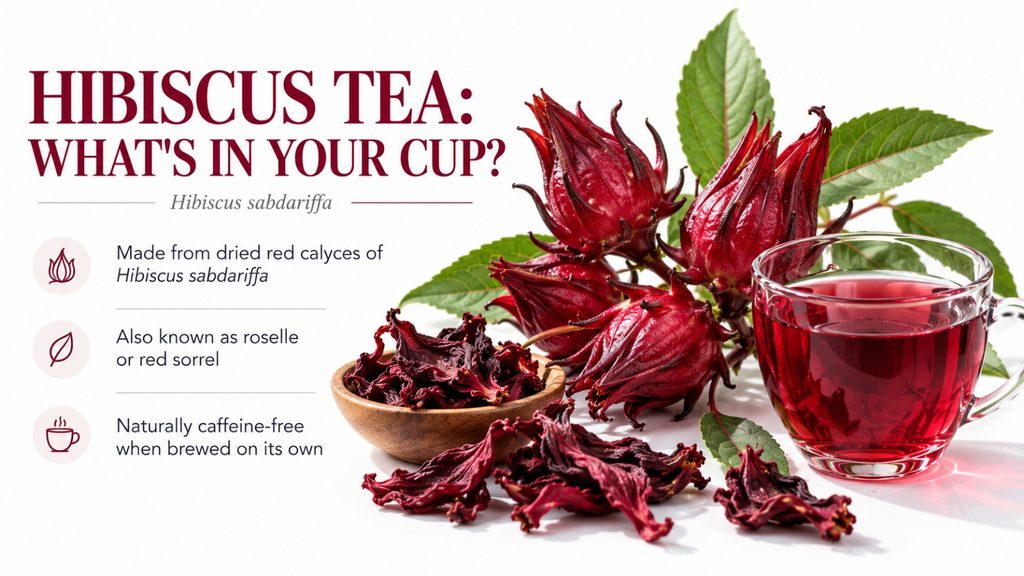
Hibiscus flower tea is made from the dried red calyces of Hibiscus sabdariffa, a plant also called roselle or red sorrel. The calyx is the fleshy red part that wraps around the flower’s seed pod. That’s what’s in your pack, even though most of us call them flowers. You’ll see some labels say hibiscus tea leaves, but you’re not getting leaves; you’re getting those red calyces.
It’s also not the showy gudhal flower that grows outside so many Indian homes. That’s a different hibiscus. So if you’re wondering about the hibiscus tea plant, it’s roselle, a bushy plant grown for its calyces. The deep red comes from anthocyanins, the same kind of pigment that colours our butterfly pea flower tea blue. And since it doesn’t come from the tea plant, a plain cup of hibiscus herbal tea has no caffeine.
Hibiscus Tea Benefits: What the Research Actually Shows
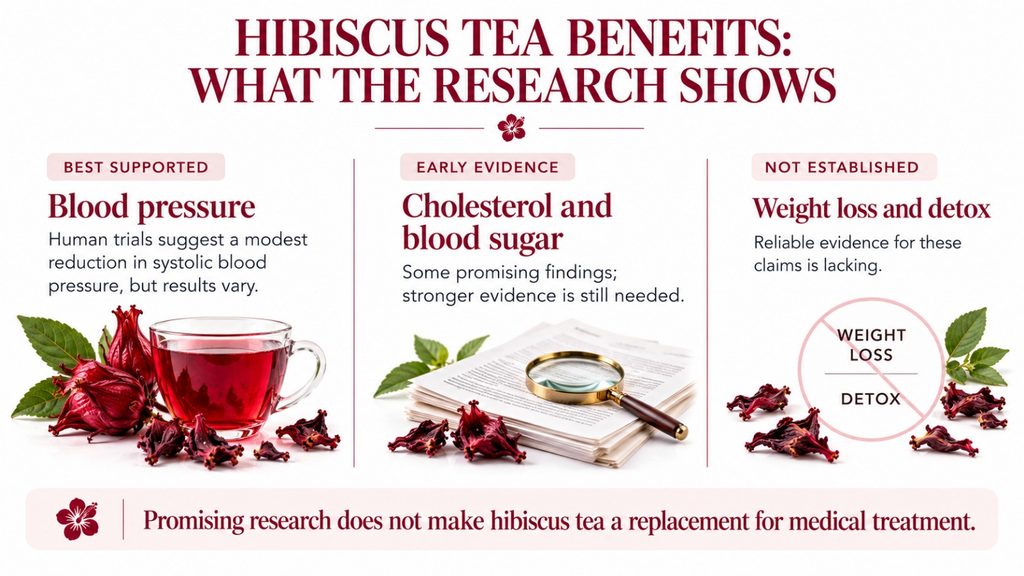
The best-supported hibiscus tea benefit is a small drop in blood pressure. Cholesterol and blood sugar look possible but less certain, and we didn’t find good evidence for weight loss or “detox.” Here’s the quick view before we go through each one.
| Claim | What we found | How solid it is |
| Blood pressure | Modest drop in the top (systolic) number in pooled trials | Best supported, but results vary a lot |
| Cholesterol | Small LDL drop in one 2022 analysis | Mixed |
| Blood sugar | Some studies suggest an effect | Early |
| Weight loss and detox | Nothing solid found | Unproven |
Hibiscus tea for high blood pressure
This is where most of the research sits. A 2015 meta-analysis of randomized trials pooled five trials with 390 people and found a significant blood pressure effect, though the authors said better-designed trials were still needed. A bigger 2022 meta-analysis of 17 trials found hibiscus lowered systolic pressure by about 7 points compared with placebo, and the drop was biggest in people whose blood pressure was already high.
Before you get excited, the range around that number was wide, roughly 1 to 13 points, and the trials differed a lot from each other. So hibiscus tea for high BP is a promising helper, not a treatment. If you take blood pressure medicine, don’t swap it for tea, and let your doctor know you’re drinking it.
Cholesterol and blood sugar
The 2022 analysis also found a small drop in LDL, the “bad” cholesterol, compared with other teas and placebo. The range was wide again, and other reviews are more mixed, so we’d call it early. Blood sugar is at the same stage. If you take diabetes medicine, mention the tea to your doctor too, since hibiscus may nudge your numbers down.
Antioxidants, weight loss and detox
Hibiscus is rich in anthocyanins, and those show antioxidant activity in lab tests. What a cup of tea does inside your body is harder to say. As for hibiscus tea and weight loss, we didn’t find solid evidence that it makes you lose weight. It’s low in calories and has no caffeine, so if it replaces a sugary drink, that swap helps in the ordinary way. And detox? Your liver and kidneys already do that job, and no tea takes it over.
Hibiscus Tea Recipe: Hot, Iced and Hibiscus Green Tea
If you want a simple hibiscus tea recipe, all you need is dried flowers and hot water. This makes about two cups.
- Put about a tablespoon of dried hibiscus flowers in a pot or jug.
- Pour in two cups of just-boiled water.
- Cover it and let it steep for five minutes, a little longer if you like it stronger and more sour.
- Strain out the flowers.
- Stir in a spoon of honey if you like, once the tea has cooled a little.
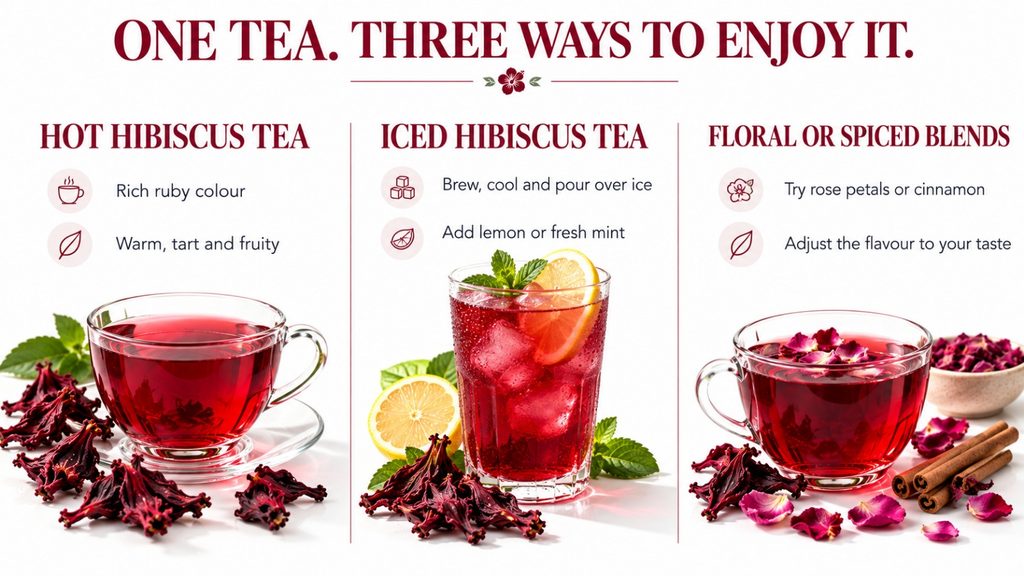
For iced hibiscus tea, brew it a bit stronger, let it cool, then pour it over ice with a squeeze of lemon or a few mint leaves.
You can also play with it. For hibiscus green tea, add a pinch of green tea to the pot, and remember this version will have some caffeine. For rose hibiscus tea, drop in a few dried rose petals, which soften the sourness with a floral note. And cinnamon hibiscus tea is just a small cinnamon stick added to the pot, which is lovely on a cooler evening.
If you’d rather skip the hunt for good flowers, our hibiscus tea is whole dried calyces in a 50 g pouch, and it goes really well with a spoon of our raw forest honey.
Hibiscus Tea Bags or Loose Flowers? What to Look For When You Buy
Lots of people search for hibiscus tea online, and hibiscus tea Amazon is a very common first stop. Marketplaces are fine; you just need to read the label. Whether you’re buying hibiscus tea in India or anywhere else, a few things are worth checking.
Loose whole flowers tend to give a deeper colour and a cleaner, tart flavour, and you can see exactly what you’re drinking. Hibiscus tea bags are quicker and easier to carry, but check what’s actually inside, because some blends add flavours or sugar. Either way, the pack should list what’s in it and say there’s no added colour. The flowers should look deep red, not faded or brown, and smell fruity, not musty.
If you’re searching for organic hibiscus tea, ask for proof. A claim of organic should come with a certificate, so ask any brand you’re considering to show theirs. And once a pack is open, close it tightly and keep it somewhere cool and dry.
Hibiscus Tea Side Effects and Who Should Skip It
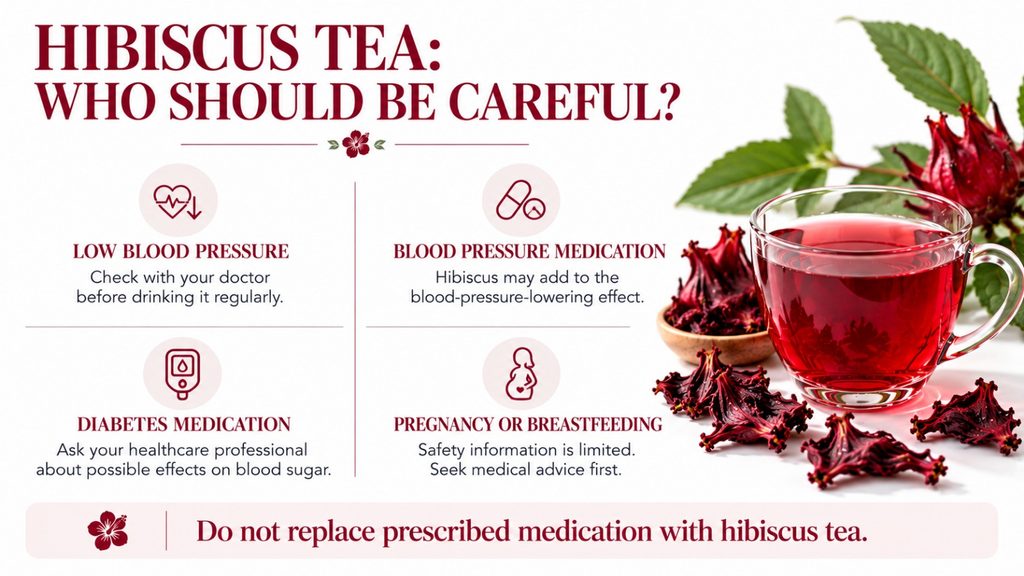
For most healthy adults, a cup or two is fine. Some people report gas or an upset stomach, mostly with large amounts, as far as we could tell. The bigger issue is blood pressure, since hibiscus can lower it. Check with your doctor before drinking it regularly if any of these sound like you:
- Your blood pressure runs low, or you get dizzy easily.
- You take blood pressure medicine, since hibiscus can add to the effect.
- You take diabetes medicine, since it may nudge your blood sugar down too.
- You’re pregnant or breastfeeding, because there isn’t enough research and some sources raise questions about hormones.
If none of that applies and your stomach is happy, one to two cups a day is a common routine. This is general information, not medical advice.
Is Hibiscus Flower Tea Worth Making Part of Your Day?
Yes, as a tart, caffeine-free cup you actually enjoy. The blood pressure research is real, though modest and uneven. The cholesterol and blood sugar results are early, and the weight loss claims just aren’t there yet. Drink it for the taste, treat anything extra as a bonus, and talk to your doctor first if you take blood pressure medicine or are pregnant.
If you’d like to try hibiscus alongside something calmer, our blue tea and hibiscus tea duo gives you both, one for the morning and one for the evening. Curious what blue tea is all about? Read our guide to aparajita flower benefits. And if you have a question we didn’t cover, check our FAQ page or message us.
Hibiscus Tea FAQs
Does hibiscus tea lower blood pressure?
It can, a little. Pooled results from human trials show a modest drop in the top (systolic) number, and the effect looks bigger in people who start with high blood pressure. But results vary a lot between studies, so it’s a helper at best. It doesn’t replace medicine, and your doctor should know if you’re drinking it.
Is hibiscus flower tea good for weight loss?
Not on its own. We didn’t find solid evidence that it makes you lose weight. It does have almost no calories without sugar and no caffeine, so if it replaces a sweet drink, that swap helps in the ordinary way. Think of it as a small part of a routine, not a shortcut.
Can I drink hibiscus tea every day, and how many cups is okay?
Most people drink one or two cups a day without trouble, and that’s the range we suggest. Long-term daily use in large amounts hasn’t been studied much, and it can lower blood pressure, so go slowly if yours runs low. Check with your doctor if you take regular medicines.
Is hibiscus herbal tea caffeine-free?
Yes, plain hibiscus herbal tea is naturally caffeine-free because it comes from the dried calyces of the roselle plant and not from the tea plant. If you blend it with green tea, though, the blend will have some caffeine from the green tea.
Can I mix hibiscus tea with green tea?
Yes, hibiscus green tea is a popular blend. Hibiscus brings a tart, fruity edge and a red colour, and green tea adds a mild taste and some caffeine. Start with equal parts, taste as you go, and adjust until it feels right for you.
Who should not drink hibiscus tea?
People with low blood pressure, anyone taking blood pressure or diabetes medicines, and anyone pregnant or breastfeeding should check with a doctor first. Hibiscus can add to the effect of those medicines, and pregnancy safety isn’t well studied. If you get stomach upset or feel dizzy, stop and get advice.
Is hibiscus tea safe during pregnancy?
There isn’t enough research to call it safe, and some sources raise questions about its effect on hormones, so the careful answer is to ask your doctor before drinking it while pregnant or breastfeeding. Until then, it’s easier to skip it.
Are hibiscus tea bags or loose flowers better?
Loose whole flowers tend to give a deeper colour and a cleaner, tart flavour, and you can see exactly what you’re getting. Hibiscus tea bags are quicker and easier to carry. Whichever you pick, check the label for added colours, flavours or sugar.
Is hibiscus tea made from the hibiscus flowers in my garden?
Not usually. Hibiscus tea comes from the red calyces of Hibiscus sabdariffa, also called roselle, and not from the showy gudhal flowers most people grow at home. Most of the research is on roselle too, so don’t swap one for the other.