Herbal Teas Explained: Hibiscus, Blue Tea and How to Choose
What herbal tea is, how hibiscus and butterfly pea tea differ, and what to look for on the pack.
Herbal teas are made from flowers, leaves or herbs instead of the tea plant, so flower teas like hibiscus and butterfly pea are naturally caffeine free. Choose ones with a single, clearly named ingredient and nothing added.
What is herbal tea?
Strictly speaking, "tea" comes from the tea plant, Camellia sinensis. Herbal teas, sometimes called tisanes, are made from other plants: flowers, leaves, roots or herbs steeped in hot water. That is why most flower teas have no caffeine, and why they come in colours and flavours that ordinary tea never could.
Hibiscus tea: tart, fruity and ruby red
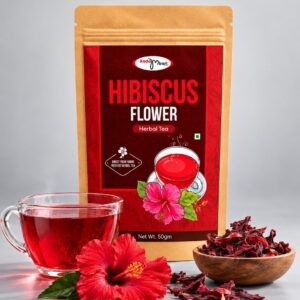
Hibiscus tea is made from the dried calyces of the roselle plant, Hibiscus sabdariffa. It brews a deep ruby-red cup with a tart taste that many people compare to cranberry. It is lovely hot, and even better iced on a warm afternoon.
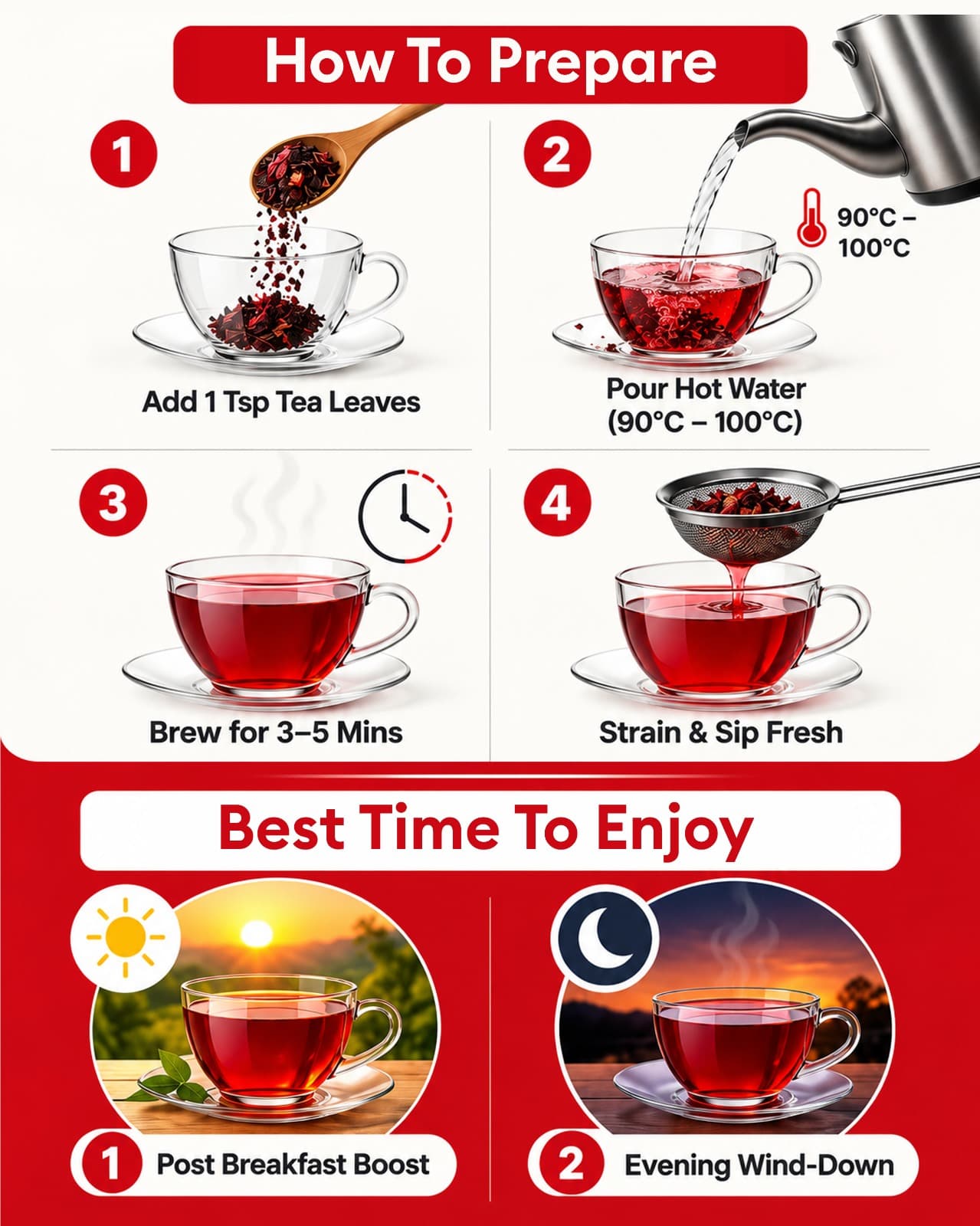
Kadambari Hibiscus Tea is whole dried roselle flowers and nothing else. Use about 2 g per 150 ml cup and steep for 2 to 3 minutes. Our full guide to making hibiscus tea covers hot, iced and cold brew, plus four easy recipes.
Butterfly pea tea: the blue tea that changes colour
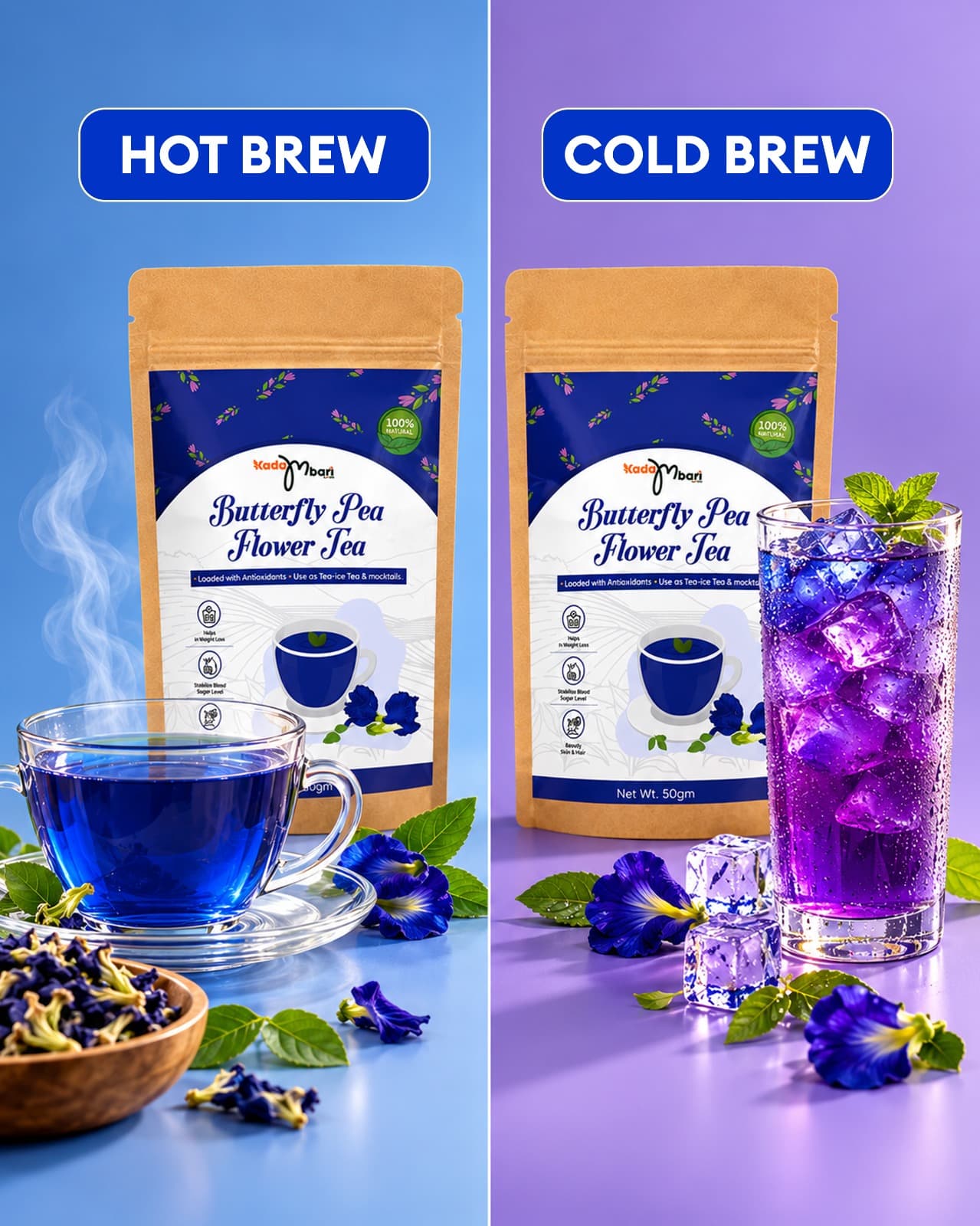
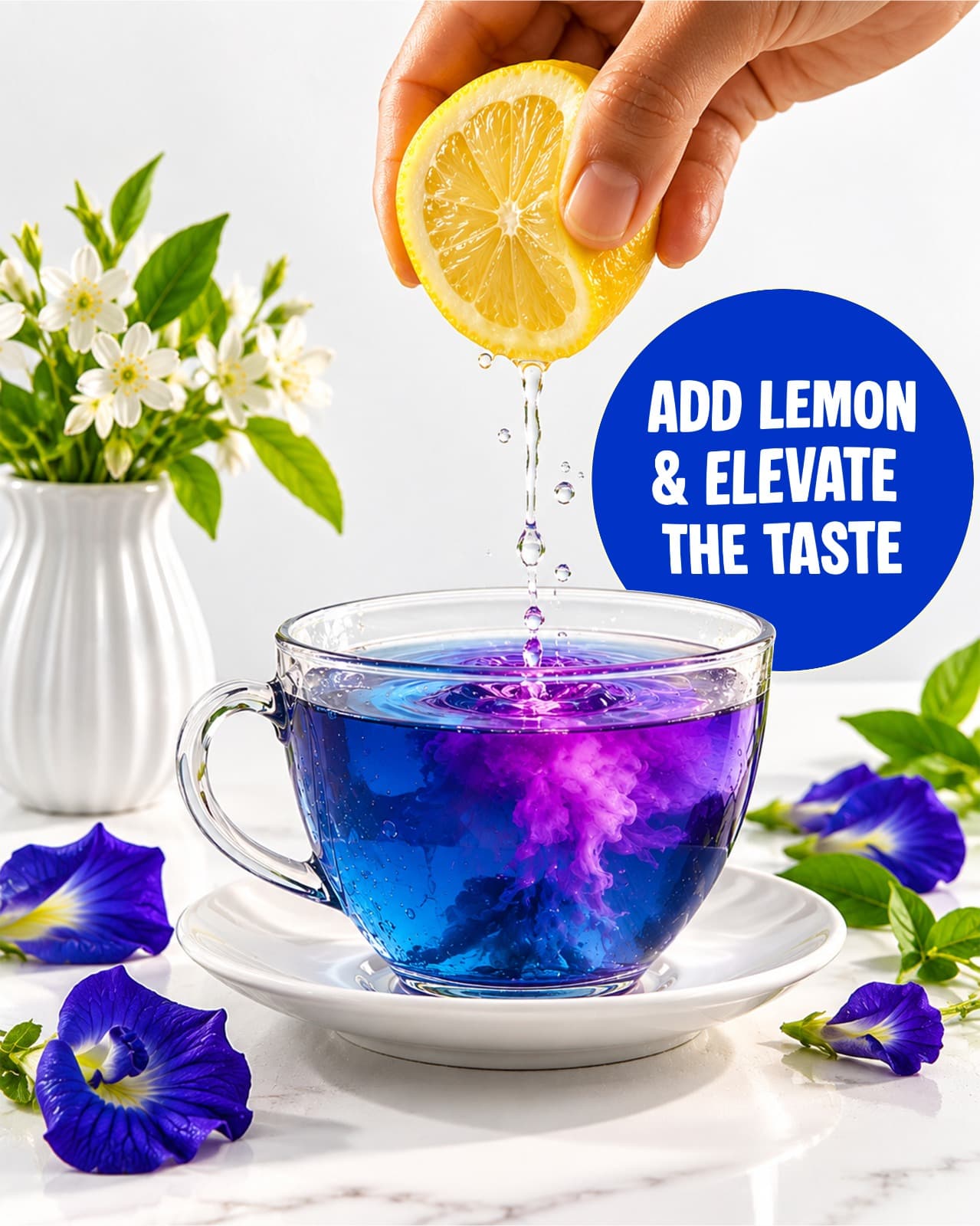
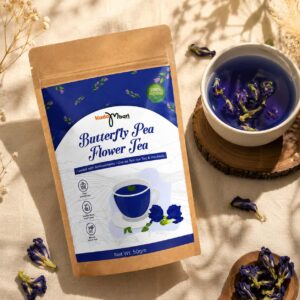
Butterfly pea (Clitoria ternatea) is known in India as aparajita, shankupushpam or sangu poo. Its dried flowers brew a deep indigo cup with a mild, earthy taste. Add a squeeze of lemon and the tea turns violet in seconds, which makes it a favourite for iced drinks and mocktails.
How to choose a good herbal tea
- Look for a short ingredient list. The best flower teas have one ingredient: the flower. Skip ones with added flavouring or colour.
- Prefer whole flowers to dust. Whole dried flowers keep their colour and taste better than the fine powder in many tea bags, and you can see what you are getting.
- Check the label and certification. A trustworthy pack shows an FSSAI licence number, nutrition information and a best-before date. Certified organic products give you extra assurance about how they were grown.
- Read health claims carefully. Enjoy herbal tea for its taste and as a sugar-free drink. If you have a medical condition, are pregnant or take medicine, ask your doctor before drinking it regularly.
Making herbal tea part of your day
Morning
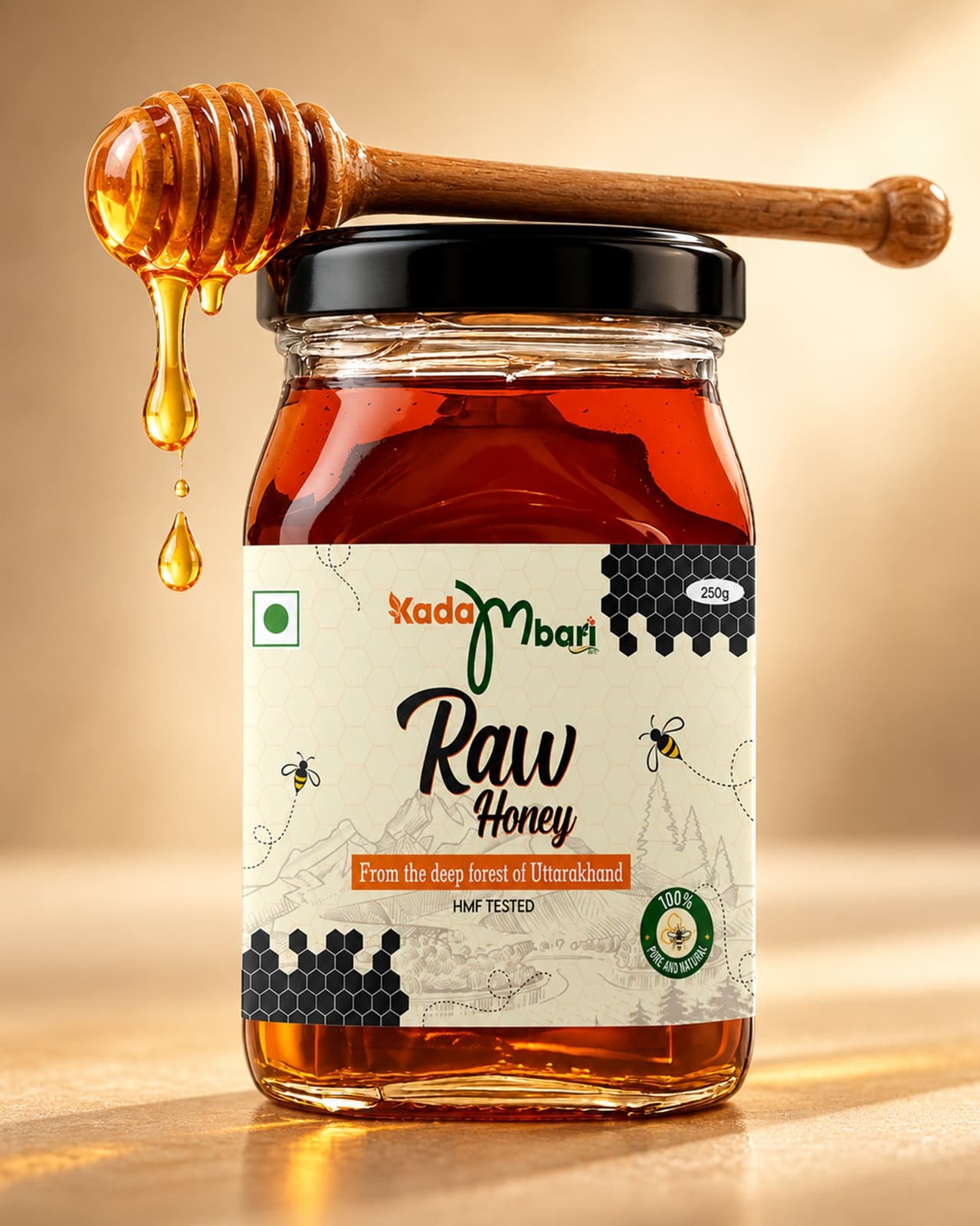
A bright cup of hibiscus tea, or blue tea with a spoon of raw forest honey.
Afternoon
Iced hibiscus tea instead of a sugary cold drink.
Evening
A calm, caffeine-free cup of blue tea to wind down.
For guests
Blue tea with lemon. The colour change never fails to impress.
Herbal tea FAQs
Do herbal teas contain caffeine?
Most herbal teas made only from flowers, such as hibiscus and butterfly pea, contain no caffeine. Blends that include green or black tea leaves do.
Which is better, hibiscus tea or blue tea?
Neither is better, they are different. Hibiscus is tart and fruity and great iced. Blue tea is mild and earthy, and turns purple with lemon. Many people drink hibiscus in the day and blue tea in the evening.
Can I add honey to herbal tea?
Yes. Let the tea cool for a minute first, then stir in a spoon of raw honey.
How should I store herbal tea?
In an airtight container in a cool, dry place, away from sunlight and strong smells.

Still have a question? Ask us on WhatsApp and a real person will reply.
Ask on WhatsApp